

“We, too, stand vindicated despite objections that we were invoking the slippery slope fallacy. It turns out that those slopes really are slippery.
We also cannot overlook how the success of the same-sex marriage movement fueled the cause for transgender “rights.” Though some homosexual activists are now putting distance between themselves and the more extreme wings of the transgender movement, that distance is artificial and purely political. Homosexual activists need to sit back and take ownership of the reality that the transgender movement has drafted off their success. “Love is love” and “Here, kid, take these hormones” share a common root in denying human teleology.” - Andrew T. Walker
It has become trendy in some social conservative circles to argue that legalizing gay marriage was a “slippery slope” to (among other things) the proliferation of trans activism and gender ideology over the past decade. The quotation above, from conservative Christian writer Andrew T. Walker, is just one example.
I can understand why. Same-sex marriage was legalized nationwide in the USA in 2015, and, since that time, the number of people undergoing gender transition has exploded. On top of this, legislation allowing “gender identity” to trump biological sex has proliferated.
But is it fair to blame same-sex marriage for all of this? Was same-sex marriage, despite being sold as an equal rights measure for gay and lesbian couples, actually a slippery slope to all sorts of gender woo-woo being codified into law and culture? I would argue no. In fact, the more I study the history of both transgender and LGB activism, the more convinced I am that this so-called “slippery slope” falls as flat as an iron.
Gay Marriage is nothing but gay marriage.
For legislation to be a true “slippery slope,” there has to be something built into it that can be exploited for other ends. Granting marriage licenses to same sex couples does not do that. There is nothing about legal recognition of same-sex marriage that would make it easier for, say, a trans-identified male to play on a women or girls’ sports team. I mean, why would it? Nobody uses marriage licenses to prove their eligibility for sports or other sex-segregated activities. Nor would a marriage license make it easier for one to obtain cross-sex hormones or surgeries.
For the “slippery slope” argument to work, it would have to be more subtle.
No, Obergefell wasn’t a slippery slope, either.
Maybe the slippery slope is the means by which same-sex marriage was legalized nationwide in the USA, namely Obergefell. Is there something in the legal precedent set by Obergefell that opened up the floodgates to gender madness?
The biggest victory transgender activists scored at the US Supreme Court is Bostock v. Clayton County. Bostock hinged on the idea that it was not possible to discriminate according to transgender status without also discriminating according to sex. Since Title VII of the 1964 Civil Rights Act prohibits employment discrimination according to sex, Justice Gorsuch (writing for the majority) argued, it protects transgender individuals from employment discrimination. In regard to the particular case at hand, it meant that a trans-identified male employee had the right to wear women’s clothing, and not abide by the men’s dress code.
I found the decision from the Supreme Court’s website & did a search for “Obergefell.” There were only three references, and all three are in dissenting opinions (one from Alito; the other two from Kavanaugh).
This should not surprise anyone who is familiar with Bostock.
Obergefell was irrelevant — Bostock was a case about employment discrimination law going back to the Civil Rights movement of the 1960s.

Gay marriage as a “normie” idea
Alright, so maybe neither same sex marriage licenses nor Obergefell are to blame. But, still, maybe trans activism is still the brainchild of gay marriage. Maybe the original proponents of gay marriage really wanted gender self-ID all along.
I would still argue, “no,” that is not an accurate view of the intentions behind the push for marriage equality. Let’s consider the history of the movement behind marriage equality. Marriage equality was not something gay rights activists pushed for early on, nor was it something lesbian radical feminists were pushing (if anything, they were busy critiquing marriage as a patriarchal institution.) It was an idea born out of the crucible of the AIDS epidemic, when many gay people began to question the wisdom of promiscuity and unbridled sexual liberation. Andrew Sullivan, who is openly gay, is often credited as making the first case for gay marriage in a major American journal, back in 1989. In that piece, called “Here Comes The Groom: A (conservative) case for gay marriage,” Sullivan acknowledged that lots of his gay peers were originally too radical and counter-cultural for gay marriage. However, since the AIDS epidemic, they started to see the wisdom in being more monogamous:
“The gay movement has ducked this issue primarily out of fear of division. Much of the gay leadership clings to notions of gay life as essentially outsider, anti-bourgeois, radical. Marriage, for them, is co-optation into straight society. For the Stonewall generation, it is hard to see how this vision of conflict will ever fundamentally change. But for many other gays—my guess, a majority—while they don’t deny the importance of rebellion 20 years ago and are grateful for what was done, there’s now the sense of a new opportunity. A need to rebel has quietly ceded to a desire to belong. To be gay and to be bourgeois no longer seems such an absurd proposition. Certainly since AIDS, to be gay and to be responsible has become a necessity.”
It should be noted that Andrew Sullivan, while not 100% on the “gender critical” side, is quite critical of the excesses of trans activism. So is Jonathan Rauch, who wrote “Gay Marriage: Why It Is Good for Gays, Good for Straights, and Good for America” in 2004. Clearly, one cannot impute some sort of crypto pro-gender ideology motive onto either of those two men.
Meanwhile, queer theory’s relationship with gay marriage was rather ambivalent. Queer theorists were more preoccupied with dismantling institutions they considered too “heteronormative” or “oppressive”… and many considered marriage one of them. This is not exactly a secret. In 2010, NPR interviewed Mattilda Bernstein Sycamore, a queer activist who self-identifies as “gender queer” (he is male and, from what I can tell, usually goes by she/her pronouns), and who wrote the book That’s Revolting: Queer Strategies for Resisting Assimilation. Sycamore explained that he did not like the way the gay movement was preoccupied with assimilating into straight privilege, including marriage. He lamented,
“I mean, if we look at the mainstream gay movement at this point, it’s centered around this assimilationist access. So, you know, the dominant issues have become accessing straight privilege. So marriage, military service, adoption, ordination into the priesthood - those are all straight issues last time I checked, right? And what’s so sad is that instead of the radical roots of gay liberation you mentioned in the introduction, we look at the contemporary gay movement and it’s all about, you know, we’re just like you. ”
I doubt that, had the marriage equality movement never taken off, these marriage-skeptical queers would have “gone gentle into the good night.” For all we know, it’s quite possible that they would have claimed victory for the non-assimilationist cause, and pushed the LGB movement into a “TQ+” direction earlier and harder.
Legal sex change predated same-sex marriage
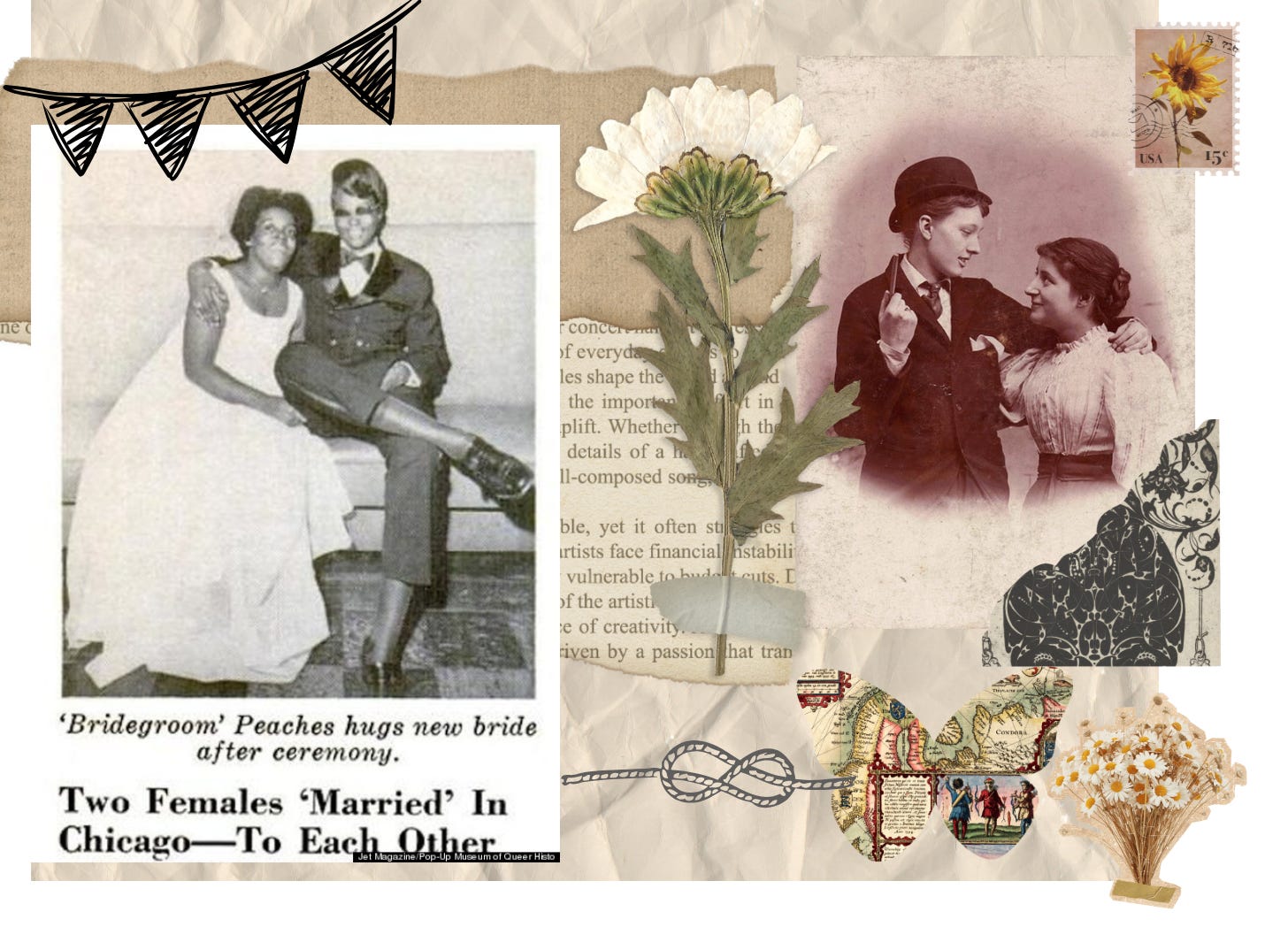
Furthermore, we have to bear in mind that transgender activists and litigants were already enjoying some legal breakthroughs before same-sex marriage was on the table.
For example, Sweden was the first country in the world to allow people to officially change their legal sex (with restrictions) all the way back in 1972. Same-sex marriage was not recognized in Sweden until 2009, and hardly anybody was talking about same-sex marriage in 1972.
The 1970s proved to be a pivotal decade for legal recognition of transgender identities in the US, as well. One important court case in the USA that set a precedent for gender change recognition was the M.T. v. J. T. case. M.T. was a trans-identified male who had undergone full medicalization, including castration, and claimed spousal support when his husband, J.T., left him. The court ruled in favor of M.T., not because it felt like same-sex marriage was or should be legally recognized, but because it felt M.T.’s surgery effectively turned M.T. from male to female. The decision of the court was clear that the definition of marriage as exclusively heterosexual was not in dispute: “We accept-and it is not disputed-as the fundamental premise in this case that a lawful marriage requires the performance of a ceremonial marriage of two persons of the opposite sex, a male and a female. Despite winds of change, this understanding of a valid marriage is almost universal.”
However, the decision affirmed medicalization was enough to grant a transsexual legal recognition as their non-natal sex:
“A transsexual in a proper case can be treated medically by certain supportive measures and through surgery to remove and replace existing genitalia with sex organs which will coincide with the person’s gender. If such sex reassignment surgery is successful and the postoperative transsexual is, by virtue of medical treatment, thereby possessed of the full capacity to function sexually as a male or female, as the case may be, we perceive no legal barrier, cognizable social taboo, or reason grounded in public policy to prevent that person’s identification at least for purposes of marriage to the sex finally indicated.”
Ironically, had same-sex marriage already been legal in New Jersey in 1976, this lawsuit would have been superfluous — M.T. and J.T.’s marriage would have been considered valid even without M.T. being legally recognized as female. In other words, the lack of recognition for same-sex marriage was the impetus for the sex change recognition in this case. Should we call heterosexual-only marriage a slippery slope for gender ideology, then?

TQ sneaks into legislation early
Eventually, trans lobbyists learned how to cleverly sneak pro-gender identity provisions into law when nobody was looking, before marriage equality was enacted.
Kara Dansky has written about how Republican President George H.W. Bush signed the The Prison Rape Elimination Act into law in 2003, with unanimous support from Congress. One provision of the law allowed some transgender individuals to be placed in the prison facility according to their gender identity. According to Dansky, it was not until 2012 (under Democratic President Barack Obama) that rules were put in place to implement the law and the DOJ actually began moving men to women’s prisons. This is a far more blatant example of a “slippery slope” to trans excesses than gay marriage was, since the law itself (in this case, The Prison Rape Elimination Act) was able to be implemented in a way to enable harmful gender policy, under the guise of something else.
The sneakiness of the TQ lobby may also explain why the “trans explosion” of the mid 2010s did not just affect countries with legal gay marriage. For example, Greece has had gender self-ID since 2017, but only legalized gay marriage in 2024. Likewise, Malta became the first European state to constitutionally protect gender identity in 2014, around the same time same-sex civil unions were legalized, but did not have full-blown same-sex marriage until 2017. For more on how gender identity snuck its way into European policy starting in the late 2000s, check out the Athena Forum’s report “Beneath the surface: how gender identity is reshaping Europe.”
There is also the curious example of the Islamic Republic of Iran, which criminalizes same-sex relationships while allowing gender reassignment procedures. This policy is due to a Fatwa issued by the Ayatollah Khomeini in the 1980s. Indeed, it’s common for homosexuals to undergo sex-reassignment procedures in Iran as a way of “transing the gay away” and “passing” as a straight person of the opposite sex. Iran is admittedly an unusual case, but it does offer a precedent for how a society can endorse at least some claims of the transgender movement while rejecting LGB rights entirely.
TQ cultural encroachment before gay marriage
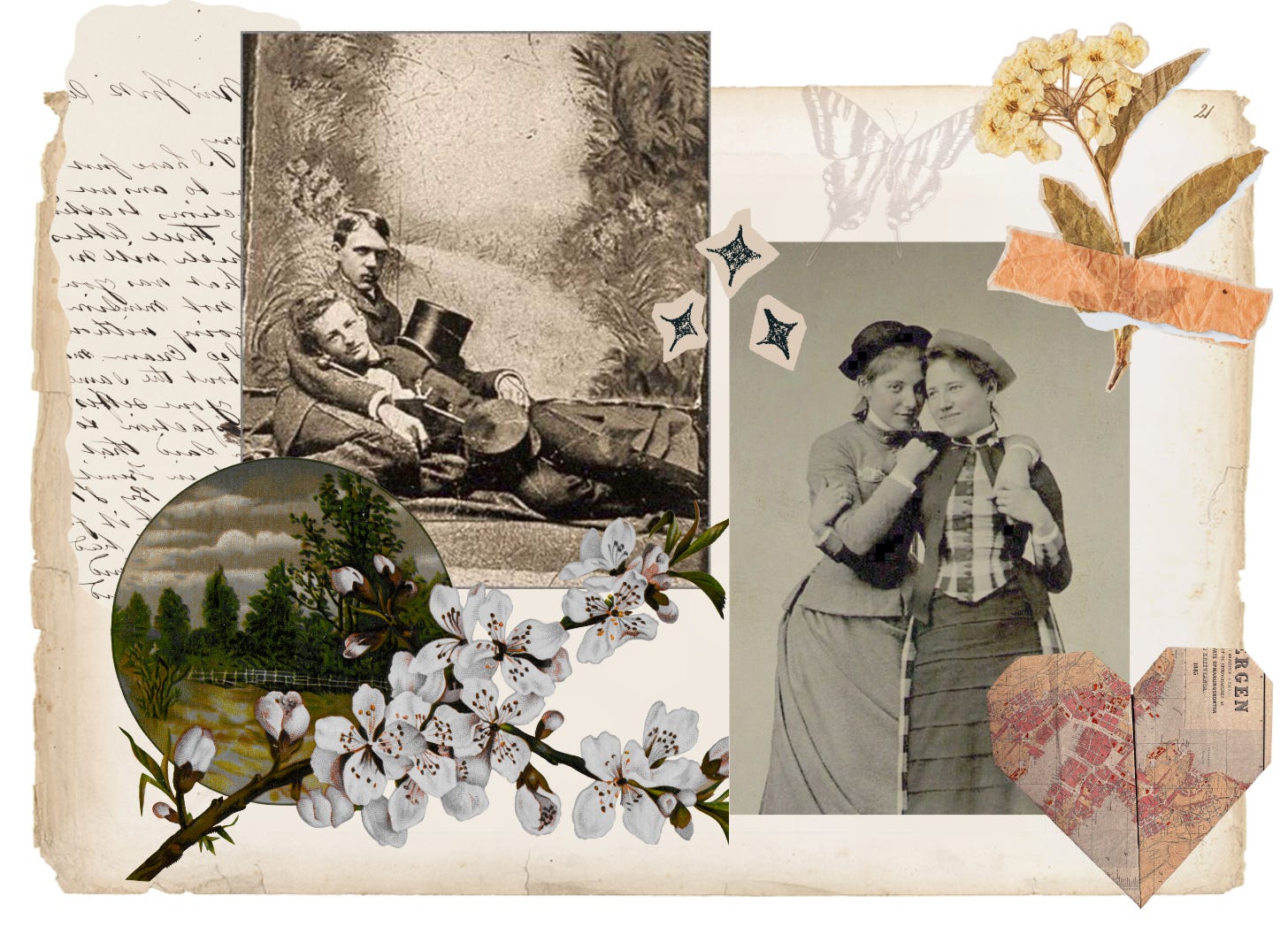
TQ stuff did not just infiltrate legislation. Those of us from left-wing cultural pockets could sense the “TQ” cultural creep in our communities long before same-sex marriage was legal.
I can speak from personal experience. My high school in the San Francisco Bay Area changed the “GSA” from “Gay Straight Alliance” to “Gender and Sexuality Awareness” when I was there in the mid 2000s (I graduated in 2007.) There was also a student at my high school who transitioned. Gay Marriage was not legal in California at the time, nor did it enjoy majority support (proposition 8, constitutionally banning same-sex marriage, passed by ballot initiative in 2008.) When I tell people about this, they are often stunned to hear that this was going on so early.
Before my high school days, lesbian and/or feminist communities took the brunt of the early transgender heat. “Camp Trans,” the group that tried to get trans-identified males into the Michigan Womyn’s Festival, began in the 1990s. And that wasn’t the beginning. Olivia Records (a women’s record company) admitted a trans-identified male sound engineer, Sandy Stone, back in the 1970s. My lesbian separatist friend Bev Jo Von Dohre has been harassed by a trans identified male since 1968. Gay marriage had nothing to do with any of this. This doesn’t stop some social conservatives from being eager to deny marriage rights to the very same lesbians who had their communities sabotaged by TRAs.
Social Media and Therapy Culture
Before we blame same-sex marriage for for the trans craze of the 2010s, we cannot overlook a key social phenomenon: social media. Thanks to social media platforms like Tumblr, ideas that would have otherwise been confined to small, academic and/or eccentric circles became disseminated to the wider population. That includes queer theory and transgender activism, not to mention all sorts of increasingly intense forms of pornography. Many young detransitioners stress the internet as being the place where they were socialized into transition.
Additionally, the rise of online spaces meant the decline of in-person spaces. Fewer teens are seeing their friends in person. LGB people are affected, too: gay bars started closing, and lesbian bars even more so (2010 is the date I sometimes hear bandied about for when lesbian bars were pretty much on their way out). We are all becoming removed from in-person community… and our bodies along with it.
There are other social trends that helped flesh out the 2000s-2010s as well, including the trend for more and more young people to go to therapy and receive psychiatric medication. Plus, more and more kids are being diagnosed with anxiety disorders. With mental distress becoming increasingly prevalent and medicated, it’s easy to see gender dysphoria diagnoses (along with its medicalization) growing along with it.
These and many more social changes should be considered as explanations for the surge in trans/queer culture in the mid 2010s.
Blame the addition of the “T” to the “LGB”
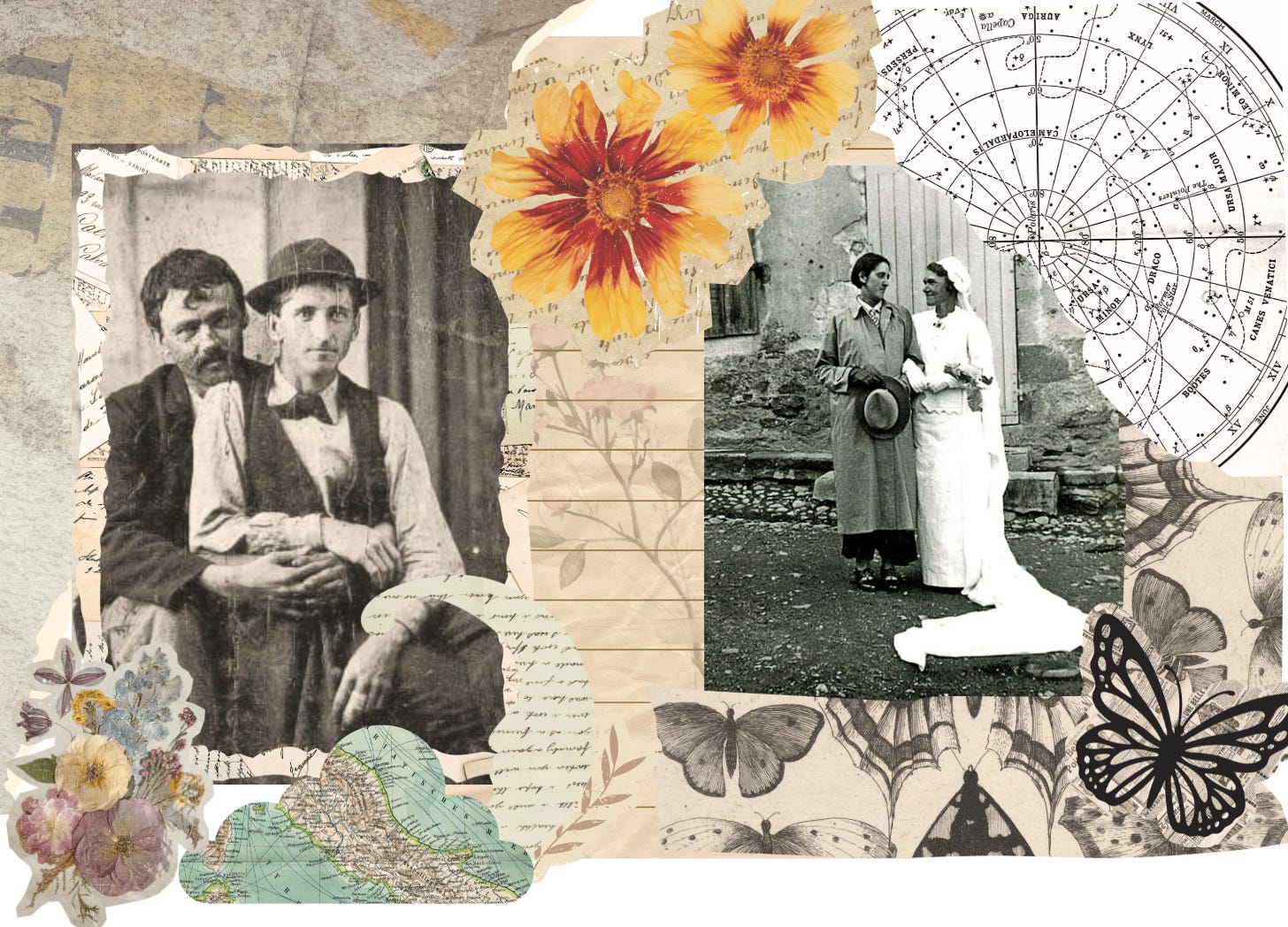
All that said, I can’t fault ordinary citizens, who are not well versed in this very niche topic, from wanting to blame “transmania” on gay marriage. Why? Because so many legacy gay rights organizations — including GLAAD, HRC, etc. — have tied LGB rights to trans rights under the “LGBTQ” acronym. And, sadly, the mainstream media complies when it frames both attempts to overturn same-sex marriage and bans on pediatric gender transition as “attacks on LGBTQ rights.” It’s understandable, then, that an ordinary observer would assume that same-sex marriage necessarily had to come with the larger package of “trans rights” (really, sex erasure).
This is all the more reason why it’s essential for the LGB to divorce itself from the rest of the alphabet. Let LGB people fight for our rights on our own terms, as we used to; the Ts, Qs, and everyone else can have their own organizations and fight their own battles. We all have our own historical movements, and trying to combine us all is like trying to graft a branch onto the wrong species of tree — where, in the end, all common sense withers and dies on the vine.

I always saw same-sex marriage as just my right as an American. I pay my taxes, vote and engage civically and to deny me the right to legally marry is unAmerican. Whatever the trans thing is about it isn’t about gay marriage. The Trans movement now seems to be about chemical and surgical conversion therapy of gay and lesbian youth, invading women’s spaces and making a nuisance of themselves. And major LGBTQ etc… organizations keep promoting the nonsense. No wonder we’re seeing the conflation between the two.
Im a 67 yo Black lesbian Californian. And when I woke up to the travesty of gender ideology in 2022, I considered that on the path back to sanity, some would arrive at the slippery slope argument. Obviously LGB marriage is between consenting adults, same legal requirements, just like heterosexual marriage. Full stop. The fact that LGB organizations aligned with the "Other" is beyond me. Being older my connection to the orgs stopped after LGB marriage became legal. My family, friends, LGB circles have not been directly affected by gender ideology. But no, in the minds of folks I know, there was no thought regarding the new letters tacked on to LGB. Yet the LGB orgs obviously did, whereby influencing Democrat elected officials.